What Are Crash Games and How Do They Work?


A rocket climbs across the screen. A balloon expands, a miner digs deeper or a chicken edges across a busy road. The setting changes, but each scene represents the same thing: a potential payout that is increasing alongside the risk of losing the bet.
Crash games are built around deciding when to stop. Cash out in time and the displayed multiplier determines the return. Wait too long and the round may crash, taking any active wager with it.
That basic idea is easy to understand, but modern crash games use several different formats, fairness systems and cash-out features. Knowing how these elements work makes it much easier to compare games properly.
What is a crash game?
A crash game is a casino game in which the potential return usually increases as a round progresses. The player must collect or cash out before an unpredictable losing event occurs.
In a traditional crash game, the action is represented by a continuously rising multiplier. Games such as Aviator, JetX and Spaceman use aircraft or characters travelling along a curve, but a graph, rocket or rapidly increasing number can serve the same purpose.
Other titles divide the round into individual steps. The player might cross a road, climb a tower or move past obstacles, with each successful action revealing a larger multiplier.
How does a crash game round work?
A conventional rising-multiplier round normally follows five stages:
Choose a stake: Select how much to wager, subject to the game’s minimum and maximum betting limits.
Place the bet: Bets must usually be confirmed during a short countdown before the round begins.
Watch the multiplier: The multiplier starts at or close to 1.00x and increases as the animation progresses.
Decide when to cash out: Collecting before the crash settles the bet at the multiplier shown at that moment.
The round ends: If the crash occurs while the bet remains active, that wager loses.
The standard payout calculation is straightforward:
Total return = stake × cash-out multiplier
For example, a stake of 2 cashed out at 3.00x produces a total return of 6. That includes the original 2 stake, making the profit 4. If the game crashes before the player collects, the return is zero.
What does the cash-out button control?
Pressing cash out controls when the wager is settled. It does not determine where the round will crash.
This distinction matters because the presence of a button can make the game feel more controllable than it is. A player can choose a cautious or ambitious exit point, but cannot influence the underlying result by watching the animation, studying previous rounds or copying another player.
Research published in the UNLV Gaming Research & Review Journal found that crash games can offer extremely large potential multipliers, although those outcomes occur rarely. A high advertised ceiling should therefore be treated as a possibility rather than a likely destination.
Traditional, stepper and hybrid crash games
“Crash game” now describes a broader category rather than one fixed layout.
Traditional crash: A multiplier rises continuously until the round suddenly ends. The player must choose when to cash out.
Stepper game: A character advances through separate stages or obstacles. After each successful step, the player can continue or collect their return.
Hybrid crash game: The central crash mechanic is combined with features such as bonus rounds, jackpots or partial cash out. Players must decide how far to continue and when to use the available features.
Manual cash out, auto cash out and partial cash out
Manual cash out requires the player to press the relevant control during the round. Auto cash out allows a target to be selected in advance, such as 1.50x or 3.00x. If the multiplier reaches that point, the game attempts to settle the bet automatically.
An automatic target does not guarantee a return. If the round crashes before reaching it, the wager still loses.
Some games permit two independent bets during the same round. Each can have a different stake and cash-out target. JetX and Pragmatic Play’s High Flyer both include two betting positions with manual and automatic collection options.
Partial cash out works differently. Spaceman and Big Bass Crash allow part of a wager to be collected while the remainder stays active. This secures a return on one portion while leaving the other exposed to the crash.
Are crash games multiplayer?
Many traditional crash games are multiplayer in presentation. Live bet lists, leaderboards and chat boxes show other people participating in the same round, creating something closer to a shared event than an isolated casino spin.
Those other players do not normally control the outcome of the game or the return attached to your wager. Their decisions are visible, but following somebody else’s cash-out point cannot reveal when the multiplier will stop.
Pragmatic Play’s crash-game portfolio, for example, combines shared rounds with chat, previous-game statistics and leaderboards. These are social and informational features rather than prediction tools.
How are crash game results generated?
The exact fairness system depends on the game and the market in which it is offered.
An RNG-based crash game uses a random number generator to establish the result according to its mathematical rules. In Great Britain, the Gambling Commission requires RNG output and game outcomes to be acceptably random and unpredictable. Adaptive behaviour, where a game changes its results in response to previous payouts or intake, is not permitted. Relevant games and RNGs must also undergo approved testing. The full requirements are set out in RTS 7.
Some crash games instead provide a player-facing provably fair system. A common approach combines a hidden server seed, a client seed and a nonce. The operator commits to the server seed by publishing its cryptographic hash before play. Once the original seed is revealed, the player can check that it matches the earlier commitment and reproduce the result.
A technical explanation of provably fair randomness provides more detail on the process. The important point is that verification happens after the result. It cannot reveal the next crash point in advance.
Provably fair verification and regulated RNG testing are different trust models. Players should check the rules of the individual game rather than assuming every crash title uses the same system.
What do RTP and house edge mean?
Return to player, commonly shortened to RTP, is the theoretical percentage of all stakes that a game is designed to return as prizes over a very large number of rounds.
A game with 97% RTP is theoretically designed to return 97 for every 100 wagered across its long-term mathematical cycle. The remaining 3 represents the house edge. It does not mean an individual player will receive 97 back after spending 100.
The Gambling Commission’s RTP guidance stresses that RTP is an average measured across a significant number of plays, rather than a promise for each session.
RTP can also vary between configurations of the same title. JetX, for example, lists an RTP range of 96.2% to 98.9%. Always check the information inside the version available at the casino rather than relying solely on a review or headline figure.
Selecting a lower cash-out target will generally produce more frequent but smaller successful returns. A high target produces fewer successful cash-outs with larger potential payouts. Changing that pattern of risk does not, by itself, remove the house edge.
How should you compare crash games?
Before playing, check:
The published RTP and whether alternative configurations exist
The maximum multiplier and any separate maximum-win limit
Minimum and maximum stakes
Manual, automatic, dual-bet or partial cash-out options
Whether the game uses an RNG, provably fair verification or both
Whether you prefer continuous multiplayer rounds or a single-player stepper
The licence held by the casino offering the game
A maximum multiplier and a maximum win are not necessarily the same. A game might theoretically reach an enormous multiplier while still limiting the total amount that can be paid from one wager.
Our provider directory and independent reviews bring these details together so games can be compared on more than their theme or advertised top prize.
Playing crash games with clearer expectations
Crash games can move quickly, so it is sensible to set spending and time limits before starting rather than making those decisions during a run. Previous losses should never be treated as evidence that a better result is due.
GambleAware recommends setting time limits, taking regular breaks and avoiding attempts to chase losses. Its safer gambling advice also provides routes to confidential support.
If playing through a promotion, check whether the game contributes towards wagering requirements and whether any maximum-bet restrictions apply. Our crash game bonuses page explains the details that should be checked before accepting an offer.
Why not try these great crash games?
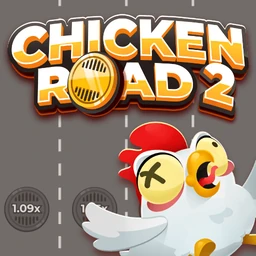
Chicken Road 2.0
InOut GamesHelp one plucky chicken brave the traffic, build the multiplier with every crossing and cash out before its highway adventure comes to a feathery end.

Spaceman
Pragmatic PlayBlast off with Pragmatic Play’s Spaceman, chase a rising multiplier and cash out before your astronaut’s cosmic adventure comes crashing back to Earth.
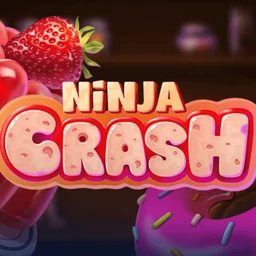
Ninja Crash
GalaxsysSlice through bouncing sweets, reveal the hidden multipliers and escape with the accumulated return before one unfortunate cut ends the entire run.
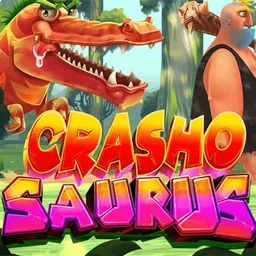
Crashosaurus
PopOK GamingOne caveman, one hungry dinosaur and far too many falling rocks turn the road towards a possible 10,000x into a lively prehistoric obstacle course.